
Indian cuisine is known for its rich flavors, aromatic spices, and centuries-old culinary traditions. From family kitchens to festive celebrations, traditional recipes play an important role in Indian culture. However, modern lifestyles and evolving food preferences have inspired chefs and home cooks to experiment with classic dishes.
Today, many people are blending traditional Indian recipes with modern cooking techniques to create innovative yet familiar flavors. This approach preserves the essence of traditional food while making it more suitable for contemporary tastes and healthier lifestyles. In this article, we explore how traditional Indian recipes are being transformed with a modern cooking twist while still maintaining their authentic charm.
Table of Contents
ToggleWhy Traditional Indian Recipes Are Perfect for Modern Cooking
Traditional Indian cuisine is extremely versatile, which makes it easy to adapt to modern cooking trends. Many recipes already use natural ingredients, diverse spices, and cooking techniques that can be modified without losing their authenticity.
Modern cooking focuses on convenience, healthier alternatives, and creative presentation. When combined with traditional Indian recipes, it allows cooks to reinvent familiar dishes while keeping their original flavors intact.
Key reasons why traditional recipes work well with modern cooking include:
-
Use of natural spices and herbs
-
Flexible cooking techniques
-
Ability to incorporate healthier ingredients
-
Strong regional diversity in flavors
These qualities make Indian cuisine ideal for experimenting with new styles of cooking.
Modern Twists on Classic Indian Breakfast Recipes
Indian breakfasts are traditionally hearty and flavorful. Dishes such as parathas, poha, and idli are enjoyed across the country. However, modern cooking methods have introduced new ways to prepare these classic meals.
Instead of deep frying or using excessive oil, many modern versions focus on lighter and healthier preparations. For example, baked samosas or air-fried kachoris provide the same taste with fewer calories.
Some popular modern twists on traditional breakfast recipes include:
-
Quinoa Upma instead of traditional semolina upma
-
Multigrain Parathas with healthier flour blends
-
Stuffed Oats Idli for a high-fiber breakfast
-
Avocado Poha combining Indian and global flavors
These variations keep breakfast nutritious while preserving the comfort of traditional Indian dishes.
Reinventing Traditional Indian Curries
Indian curries are famous worldwide for their bold flavors and rich textures. Traditionally, many curries are prepared with cream, butter, or slow-cooked gravies. Modern cooking techniques are now offering lighter and more creative alternatives.
Home cooks and chefs are experimenting with ingredients such as plant-based milk, roasted vegetables, and fusion spices to give curries a contemporary touch. This not only makes the dish healthier but also introduces new flavor combinations.
Examples of modern curry innovations include:
-
Low-cream Butter Chicken made with yogurt or cashew paste
-
Vegan Paneer Curry using tofu instead of paneer
-
Roasted Vegetable Korma for a lighter texture
-
Spinach Coconut Dal combining traditional and tropical flavors
These adaptations make traditional Indian curries suitable for modern dietary preferences.
Healthy Versions of Traditional Indian Snacks
Indian snacks are loved for their crisp texture and bold spices. However, many traditional snacks are deep-fried, which can make them heavy. Modern cooking methods such as baking, grilling, and air frying have helped create healthier versions of these favorites.
By reducing oil and incorporating nutritious ingredients, cooks can enjoy the same flavors without compromising health.
Popular healthy snack adaptations include:
-
Baked Samosas instead of deep-fried ones
-
Air-Fried Pakoras with minimal oil
-
Sweet Potato Chaat replacing fried potato chaat
-
Ragi Crackers inspired by traditional mathri
These snacks provide the same satisfying taste while making them more suitable for health-conscious eaters.
Fusion Desserts Inspired by Traditional Indian Sweets
Indian desserts are known for their richness, sweetness, and festive appeal. Traditional sweets like gulab jamun, laddoo, and kheer have been enjoyed for generations. Modern dessert trends have introduced creative ways to present these classic treats.
Chefs are now combining Indian sweets with international dessert styles to create exciting fusion dishes. These desserts maintain traditional flavors while adding a contemporary presentation.
Some examples of fusion Indian desserts include:
-
Gulab Jamun Cheesecake blending Indian and Western desserts
-
Chocolate Motichoor Laddoo for a modern flavor twist
-
Matcha Kheer combining Japanese tea with Indian pudding
-
Kulfi Ice Cream Sandwiches with modern plating
These desserts attract younger audiences while preserving the nostalgic taste of traditional sweets.
Modern Cooking Techniques Transforming Indian Cuisine
Modern kitchen technology has significantly changed how traditional recipes are prepared. Appliances like air fryers, pressure cookers, and blenders help simplify cooking without losing flavor.
These tools allow cooks to recreate traditional recipes in less time while maintaining their authenticity. They also make Indian cooking more accessible for beginners and busy households.
Common modern techniques used in Indian cooking include:
-
Air frying to reduce oil consumption
-
Slow cooking for deeper flavors in curries
-
Blending and pureeing for smooth gravies
-
Sous-vide cooking for tender meats
Using these techniques helps bring traditional Indian recipes into the modern kitchen.
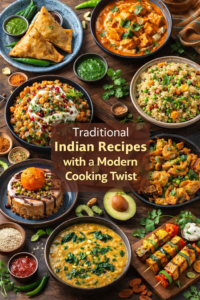
Benefits of Adding a Modern Twist to Traditional Recipes
Combining traditional Indian recipes with modern cooking methods offers several advantages. It allows people to enjoy familiar dishes while adapting them to modern lifestyles and health preferences.
Modern twists also make Indian cuisine more appealing to global audiences who may prefer lighter meals or fusion flavors.
Key benefits include:
-
Healthier cooking with less oil and refined ingredients
-
Faster preparation using modern appliances
-
Creative flavor combinations and presentations
-
Greater appeal to younger and international audiences
These advantages show how tradition and innovation can work together in the culinary world.
Tips for Creating Your Own Modern Indian Recipes
Experimenting with traditional recipes can be exciting for home cooks. By making small adjustments, you can create new dishes while respecting the original flavors.
Here are a few tips for adding a modern twist to Indian recipes:
-
Replace refined ingredients with healthier alternatives
-
Try baking or air frying instead of deep frying
-
Add global ingredients like avocado, quinoa, or herbs
-
Experiment with modern plating and presentation
These simple ideas can help transform traditional recipes into contemporary culinary creations.
Conclusion
Traditional Indian recipes carry generations of history, culture, and flavor. By adding a modern cooking twist, these dishes can evolve while still honoring their roots. From healthier snacks to fusion desserts and innovative curries, modern adaptations make Indian cuisine more versatile and accessible.
Blending traditional cooking with modern techniques allows food lovers to enjoy the best of both worlds. As culinary trends continue to evolve, traditional Indian recipes will remain an essential foundation for creative and flavorful cooking.
