
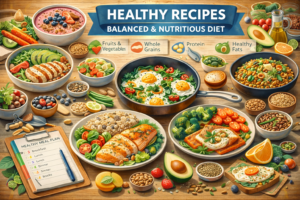
Maintaining a balanced and nutritious diet is essential for overall health and well-being. Healthy eating provides the body with the nutrients it needs to function properly, support growth, and prevent various health problems. Nutrition experts consistently emphasize that a balanced diet should include a variety of foods such as fruits, vegetables, whole grains, lean proteins, and healthy fats.
Healthy food recipes make it easier for people to incorporate these essential nutrients into their daily meals. Preparing meals at home allows individuals to control ingredients, portion sizes, and cooking methods. By focusing on simple and nutritious recipes, people can create meals that are both delicious and beneficial for long-term health.
Importance of a Balanced and Nutritious Diet
A balanced diet provides the body with the necessary vitamins, minerals, proteins, carbohydrates, and fats required for optimal functioning. These nutrients help support the immune system, maintain energy levels, and promote healthy organ function. Eating a variety of nutrient-rich foods also helps reduce the risk of chronic diseases such as heart disease, diabetes, and obesity.
Nutrition guidelines recommend including multiple food groups in daily meals to achieve dietary balance. Fruits and vegetables provide essential vitamins and antioxidants, while whole grains offer fiber and sustained energy. Lean proteins support muscle growth and repair, and healthy fats contribute to brain health. A well-balanced diet ensures that the body receives all the nutrients needed for a healthy lifestyle.
Benefits of Preparing Healthy Meals at Home
Preparing meals at home offers several advantages for maintaining a nutritious diet. Home cooking allows individuals to choose fresh ingredients and avoid excessive amounts of salt, sugar, and unhealthy fats often found in processed foods. It also provides better control over portion sizes and cooking methods.
Cooking at home encourages healthier eating habits and can improve overall dietary quality. It also allows families to experiment with new recipes and incorporate a wider variety of nutritious foods. Additionally, home-cooked meals often promote mindful eating and stronger family connections when meals are shared together.
Healthy Breakfast Recipes for Energy and Focus
Breakfast is often considered the most important meal of the day because it provides the body with energy after an overnight fast. A nutritious breakfast helps improve concentration, stabilize blood sugar levels, and support physical and mental performance throughout the day. Including a balance of protein, fiber, and healthy carbohydrates can make breakfast more satisfying and nourishing.
Examples of healthy breakfast recipes include oatmeal with fresh fruits and nuts, whole-grain toast with avocado and eggs, or yogurt topped with berries and seeds. These meals provide essential nutrients such as fiber, protein, vitamins, and healthy fats. A well-balanced breakfast helps start the day with sustained energy and improved focus.
Nutritious Lunch Recipes for Sustained Energy
Lunch plays an important role in maintaining energy levels and preventing fatigue during the day. A balanced lunch should include lean protein, whole grains, and plenty of vegetables to provide lasting energy and essential nutrients. Eating a nutritious midday meal helps support productivity and prevents overeating later in the day.
Healthy lunch recipes can include grilled chicken salads with mixed vegetables, quinoa bowls with roasted vegetables and legumes, or whole-grain wraps filled with lean protein and fresh greens. These meals provide a combination of protein, fiber, and healthy carbohydrates that support steady energy levels and overall health.
Healthy Dinner Recipes for Balanced Nutrition
Dinner is an opportunity to replenish the body with nutrients after a busy day. A healthy dinner should be balanced and not excessively heavy, focusing on lean proteins, vegetables, and whole grains. Eating a nutritious evening meal can support digestion, muscle recovery, and overall well-being.
Healthy dinner recipes may include baked fish with steamed vegetables and brown rice, vegetable stir-fry with tofu, or grilled lean meat served with a variety of colorful vegetables. These meals provide essential nutrients such as protein, vitamins, and minerals. Balanced dinners contribute to maintaining healthy body weight and long-term health.
Healthy Snacks for Between Meals
Healthy snacks can help maintain energy levels between meals and prevent excessive hunger. Choosing nutrient-dense snacks rather than highly processed options supports better nutrition and overall health. Snacks should ideally include a combination of protein, fiber, and healthy fats to provide sustained energy.
Nutritious snack ideas include fresh fruit with nuts, yogurt with seeds, vegetable sticks with hummus, or whole-grain crackers with cheese. These options offer important nutrients while helping control appetite. Healthy snacking can also support balanced blood sugar levels and prevent unhealthy food choices later in the day.
Importance of Cooking Methods in Healthy Recipes
The way food is prepared plays a significant role in its nutritional value. Certain cooking methods help preserve nutrients while minimizing added fats and calories. Methods such as steaming, baking, grilling, and sautéing with minimal oil are commonly recommended for healthy cooking.
Avoiding excessive frying or heavily processed ingredients can help maintain the nutritional quality of meals. Using fresh herbs, spices, and natural seasonings can enhance flavor without relying on excess salt or unhealthy additives. Choosing healthier cooking techniques allows people to enjoy flavorful meals while maintaining good nutrition.
Incorporating Variety in Healthy Meals
Variety is an important aspect of maintaining a balanced diet. Consuming a wide range of foods ensures that the body receives different nutrients necessary for optimal health. Each food group contributes unique vitamins, minerals, and beneficial compounds that support different bodily functions.
Including colorful fruits and vegetables, different whole grains, and diverse protein sources helps create well-rounded meals. Trying new recipes and ingredients can also make healthy eating more enjoyable and sustainable. A varied diet reduces the risk of nutrient deficiencies and promotes long-term dietary balance.
Building Long-Term Healthy Eating Habits
Healthy eating is not just about occasional nutritious meals but about developing long-term dietary habits. Consistency in choosing balanced meals, controlling portion sizes, and prioritizing whole foods contributes to lasting health benefits. Small but consistent dietary changes can lead to significant improvements in overall wellness.
Planning meals in advance and preparing healthy recipes regularly can make it easier to maintain a balanced diet. When individuals develop positive eating habits, they are more likely to sustain healthy lifestyles. Over time, nutritious food choices support physical health, mental well-being, and improved quality of life.
Conclusion
Healthy food recipes play an important role in maintaining a balanced and nutritious diet. By focusing on meals that include whole foods, lean proteins, fruits, vegetables, and whole grains, individuals can provide their bodies with essential nutrients. Preparing meals at home, choosing healthy cooking methods, and incorporating a variety of foods can significantly improve dietary quality.
Balanced nutrition supports energy levels, strengthens the immune system, and reduces the risk of chronic diseases. With careful meal planning and a commitment to healthy eating habits, individuals can enjoy delicious recipes while supporting long-term health and well-being. A nutritious diet is a key foundation for a healthier and more active life.
Read more : recchiabegue.com
