
Food traditions are deeply connected to culture, family history, and regional identity. Many traditional recipes have been passed down through generations, preserving flavors and cooking techniques that reflect local ingredients and culinary heritage. However, modern cooking trends have introduced new ingredients, technologies, and creative approaches that allow home cooks to reinvent classic dishes while maintaining their authentic character.
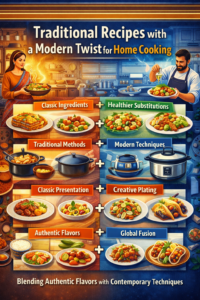
Adding a modern twist to traditional recipes does not mean replacing the original dish completely. Instead, it involves enhancing familiar flavors, improving presentation, incorporating healthier ingredients, or simplifying cooking methods. These creative adaptations make traditional meals more appealing to contemporary tastes while preserving the essence of the original recipes.
Today, home cooks around the world are blending tradition and innovation in their kitchens. By combining classic cooking methods with modern techniques, they can create dishes that are both comforting and exciting.
Understanding the Value of Traditional Recipes
Traditional recipes represent more than just food; they reflect cultural heritage and culinary wisdom developed over many generations. These recipes often rely on simple ingredients and time-tested cooking techniques that bring out rich and authentic flavors. From slow-cooked stews to handmade breads, traditional dishes emphasize patience, care, and the use of natural ingredients.
One of the strengths of traditional cooking is its emphasis on balance and nourishment. Many classic recipes include whole grains, vegetables, herbs, and natural seasonings that contribute to both flavor and nutrition. These dishes were often developed using locally available ingredients, making them sustainable and adaptable to regional conditions.
Preserving traditional recipes helps maintain cultural identity while allowing new generations to experience the flavors of the past. By understanding the foundations of these recipes, home cooks can thoughtfully adapt them without losing their original character.
Using Healthier Ingredient Substitutions
Modern cooking often focuses on improving the nutritional value of traditional dishes without sacrificing flavor. One common approach is replacing certain ingredients with healthier alternatives. For example, whole grains can be used instead of refined grains to increase fiber and nutrient content in breads, pasta, or rice dishes.
Healthy fats such as olive oil or avocado oil can replace heavier cooking fats in many traditional recipes. Similarly, reducing added sugar or salt while enhancing flavor with herbs and spices can create healthier versions of classic meals. Plant-based ingredients can also be introduced to increase vegetable content and reduce saturated fat.
These substitutions allow home cooks to maintain the familiar taste of traditional dishes while aligning them with modern dietary recommendations. The result is food that is both satisfying and supportive of long-term health.
Incorporating Modern Cooking Techniques
Advancements in kitchen technology have made it easier for home cooks to prepare traditional dishes more efficiently. Modern appliances such as pressure cookers, air fryers, and food processors can simplify complex recipes while preserving flavor and texture.
For instance, pressure cooking can significantly reduce the cooking time of dishes that traditionally require long simmering, such as stews or braised meats. Air frying allows cooks to achieve a crispy texture similar to deep frying while using much less oil. These methods make traditional recipes more practical for busy lifestyles.
Modern cooking techniques also allow for greater consistency in results. By combining traditional ingredients with innovative methods, home cooks can enjoy classic dishes with improved convenience and efficiency.
Enhancing Presentation and Plating
Presentation plays an important role in modern cooking. While traditional dishes are often served in a simple and comforting style, modern culinary trends emphasize visual appeal and artistic plating. A carefully arranged dish can elevate the dining experience and make home-cooked meals feel more special.
Home cooks can modernize traditional recipes by experimenting with creative plating techniques. Using fresh herbs, colorful vegetables, and thoughtful garnishes can add vibrancy and elegance to classic dishes. Even small details, such as serving food in unique bowls or plates, can transform the overall presentation.
Improved presentation does not change the core recipe but enhances how the dish is experienced. Combining traditional flavors with modern aesthetics helps bring new excitement to familiar meals.
Fusion of Global Flavors
One of the most interesting ways to modernize traditional recipes is by incorporating elements from different cuisines. Culinary fusion allows cooks to blend flavors, spices, and ingredients from various cultures to create unique and exciting dishes.
For example, traditional recipes can be enhanced with spices or herbs commonly used in other regions. A classic soup may gain a new flavor profile by adding international seasonings, while traditional grain dishes can be paired with global sauces or marinades. These combinations introduce new taste experiences while preserving the original dish.
Fusion cooking reflects the increasingly interconnected world of modern cuisine. It encourages creativity and experimentation while still respecting the traditional roots of a recipe.
Adapting Recipes for Modern Lifestyles
Modern lifestyles often require quicker and more flexible cooking methods. Many traditional recipes were designed for large families and long preparation times, which may not always suit today’s busy schedules. Updating these recipes to fit modern lifestyles makes them easier to prepare without compromising flavor.
Home cooks can simplify traditional dishes by reducing preparation steps, using pre-prepared ingredients, or adjusting portion sizes. Batch cooking and meal preparation are also popular strategies that allow traditional meals to be prepared in advance and enjoyed throughout the week.
Adapting recipes for convenience ensures that traditional cooking remains accessible to new generations. By making small adjustments, home cooks can continue enjoying beloved family dishes even with limited time.
Preserving Authentic Flavors
While modern adaptations can improve traditional recipes, it is important to preserve the core flavors that define the dish. Authentic spices, herbs, and cooking methods often give traditional food its distinctive character. Maintaining these elements ensures that the dish still reflects its cultural origin.
Many chefs recommend making only subtle adjustments when modernizing classic recipes. Small changes in technique, presentation, or ingredients can refresh a dish while keeping its original taste intact. The goal is to enhance rather than replace the traditional identity of the recipe.
Respecting the authenticity of traditional food helps maintain the cultural significance of these dishes while allowing them to evolve with modern culinary trends.
Encouraging Creativity in Home Cooking
Modernizing traditional recipes encourages creativity and experimentation in the kitchen. Home cooking becomes more enjoyable when individuals feel free to adapt recipes according to personal tastes and available ingredients. This flexibility allows cooks to discover new combinations and develop their own signature dishes.
Experimentation also helps cooks gain confidence in their culinary skills. By modifying traditional recipes, individuals learn how flavors interact and how different cooking methods affect texture and taste. This experience can lead to greater appreciation for both traditional and contemporary cuisine.
Creative cooking keeps traditional recipes alive while allowing them to evolve with changing tastes and lifestyles.
Conclusion
Traditional recipes remain an essential part of culinary culture, offering comfort, heritage, and timeless flavors. By introducing modern twists such as healthier ingredients, innovative cooking techniques, creative presentation, and global influences, home cooks can refresh these classic dishes for today’s kitchens.
Balancing tradition and innovation allows families to preserve beloved recipes while adapting them to modern preferences and lifestyles. These adaptations ensure that traditional cooking continues to evolve without losing its cultural roots.
Ultimately, combining the wisdom of traditional cooking with the creativity of modern cuisine creates meals that are both meaningful and exciting. Through thoughtful experimentation, home cooks can celebrate the past while embracing the future of home cooking.
Read more : engahmedgamal.com
