
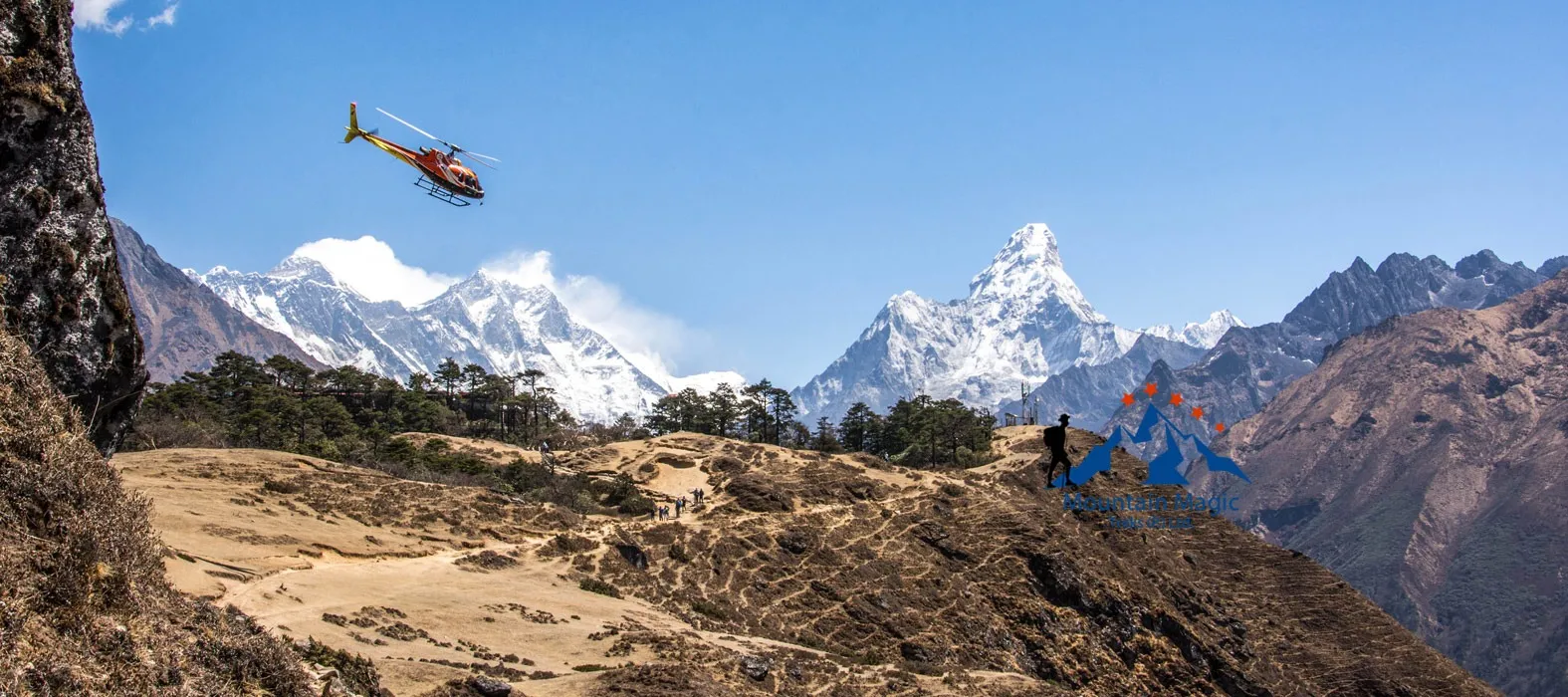
Lobuche is an important overnight destination on the upper Everest Base Camp route. Located at approximately 4,940 meters above sea level, this small mountain settlement sits between Dingboche and Gorakshep. Its location makes it a key stopping point before trekkers continue toward Everest Base Camp and Kala Patthar.
During the Everest Base Camp Trek with Helicopter Return, Lobuche is part of the final approach to the highest destinations on the itinerary. The surrounding mountains, rocky landscape, and nearby memorial area give this section a different character from the lower villages. Understanding what happens here can help travelers prepare for the demanding days ahead.
Where Is Lobuche Located on the Everest Route?
Lobuche lies in the upper Khumbu region of Nepal, close to the Khumbu Glacier. It is reached after leaving Dingboche and passing through the Dughla area.
The village has a high-altitude setting with rocky slopes and limited vegetation. Unlike lower settlements with more trees and greenery, the landscape around Lobuche is mostly open and rugged.
Its Position Between Dingboche and Gorakshep
Lobuche is an important overnight stop because it divides the upper trekking route into manageable sections.
The general route follows this order:
-
Dingboche
-
Dughla and Thukla Pass
-
Lobuche
-
Gorakshep
-
Everest Base Camp
After spending the night in Lobuche, trekkers continue toward Gorakshep before visiting Everest Base Camp according to the planned itinerary.
Why Its Location Matters
The elevation increases significantly as trekkers move from the lower Khumbu villages toward Lobuche. Staying here provides a planned break before entering the final section of the route.
It also places trekkers closer to Gorakshep, reducing the need to cover the entire distance from Dingboche in one day.
The Trek From Dingboche to Lobuche
The walk from Dingboche to Lobuche is one of the important stages of the upper Everest route. It passes through an open mountain valley before reaching a more exposed high-altitude landscape.
The walking duration can vary according to the group’s pace, rest breaks, and trail conditions.
Passing Through Dughla
Dughla is a small stopping area along the route from Dingboche to Lobuche. Trekkers often take a break here before continuing toward the higher ground.
This section includes uneven paths and uphill walking. The landscape gradually becomes more rocky as the route gains elevation.
Crossing the Thukla Pass Area
Beyond Dughla, the trail climbs toward Thukla Pass. This section is particularly important because it includes a memorial area dedicated to climbers and mountaineers who lost their lives on Himalayan mountains.
The memorials stand in an exposed mountain setting and offer a quiet place for reflection. Visitors should treat the area respectfully and avoid disturbing memorial structures or belongings.
After passing this section, the route continues toward Lobuche.
The Memorials Near Lobuche
One of the most meaningful features along this part of the route is the collection of memorials near Thukla Pass. These memorials remember people who died during Himalayan climbing expeditions.
They remind visitors that the mountains are not only places of adventure but also environments that demand respect and careful judgment.
Remembering Mountaineers
Some memorials carry names, dates, and messages honoring climbers. They reflect the risks associated with high-altitude mountaineering and the difficult conditions experienced by expedition teams.
For trekkers, this area provides a chance to understand the human history connected with the Everest region.
Visiting With Respect
The memorial area is not a recreational attraction. It is a place of remembrance.
Visitors should avoid climbing on the structures, leaving rubbish, or taking photographs in a way that disrespects the site. A quiet and considerate visit is the appropriate approach.
What Accommodation Is Available in Lobuche?
Lobuche has basic mountain teahouses that accommodate trekkers traveling toward Everest Base Camp. These facilities provide a place to sleep, eat, and prepare for the next day’s walk.
Mountain Magic Treks lists tea-house accommodation as part of its trekking package.
Understanding the Room Facilities
Rooms are generally simple, with basic beds and limited furnishings. Shared facilities are common, and comfort levels may vary between properties.
Cold temperatures are an important consideration at this elevation. Trekkers should have suitable warm clothing and follow their guide’s advice about sleeping arrangements.
Meals and Dining Areas
Teahouses provide meals and hot drinks for visitors. Food options may be more limited than those available in Namche Bazaar because supplies must reach the upper settlements.
A warm meal and a suitable place to rest are useful before the demanding walk toward Gorakshep.
5. How to Prepare for the Overnight Stay
Spending a night in Lobuche requires practical preparation. The high elevation, cold conditions, and basic accommodation make it important to organize personal belongings before reaching the village.
Keep Essential Items Accessible
Trekkers should avoid unpacking everything when they arrive. Keeping important items in a small bag makes the evening and following morning easier to manage.
Useful items include:
-
Warm sleeping clothing.
-
Gloves, a hat, and trekking socks.
-
Personal medication.
-
Drinking water and suitable snacks.
-
Headlamp or flashlight.
-
Phone, camera, and necessary charging equipment.
Pay Attention to Your Health
At approximately 4,940 meters, altitude can affect people differently. Headaches, nausea, dizziness, and unusual tiredness should not be ignored.
Trekkers should report symptoms to their guide rather than hiding discomfort to keep up with the group. Severe or worsening symptoms require immediate medical attention and may require descent.
The Everest Base Camp Trek with Helicopter Return includes acclimatization stops earlier in the itinerary, but these do not eliminate the possibility of altitude sickness.
Continuing From Lobuche to Gorakshep
The next major destination after Lobuche is Gorakshep, which sits at approximately 5,164 meters. This section takes trekkers deeper into the high-altitude landscape.
What Changes Along the Route?
The trail passes through rocky terrain and glacial surroundings. Vegetation becomes very limited, and the open landscape creates a strong sense of being far above the lower villages.
Walking can feel harder because of the elevation. A steady pace and regular communication with the guide are important.
Preparing for the Final Destinations
Gorakshep serves as the overnight base for visiting Everest Base Camp and Kala Patthar.
Trekkers should organize their daypack, check their essential equipment, and understand the guide’s instructions before leaving Lobuche.
The Everest Base Camp Trek with Helicopter Return then continues toward these major destinations before the planned helicopter journey back toward Kathmandu, subject to weather and flight conditions.
Final Thoughts
Lobuche is an essential stop on the upper Everest Base Camp route. Its position between Dingboche and Gorakshep makes it a practical overnight destination before trekkers reach the final highlights of the journey.
The walk through Dughla and the Thukla Pass memorial area also adds an important historical and human dimension to this section of the trail. Combined with basic teahouse accommodation and a demanding mountain environment, Lobuche gives trekkers a clearer understanding of the challenges of the upper Khumbu region.
For travelers choosing the Everest Base Camp Trek with Helicopter Return, understanding Lobuche helps explain how the itinerary progresses toward Gorakshep, Everest Base Camp, and Kala Patthar.
Frequently Asked Questions
1. How high is Lobuche?
Lobuche is located at approximately 4,940 meters above sea level in Nepal’s Khumbu region.
2. What comes after Lobuche on the Everest Base Camp route?
Gorakshep is the next major destination. Trekkers usually stay there before visiting Everest Base Camp and Kala Patthar.
3. What is the Thukla Pass memorial area?
It is a collection of memorials honoring climbers and mountaineers who lost their lives in the Himalayas.
4. Is accommodation available in Lobuche?
Yes. Basic mountain teahouses provide rooms, meals, and shared facilities for trekkers.
5. Is the walk from Dingboche to Lobuche difficult?
It can be demanding because of the uphill sections, uneven terrain, and increasing elevation. A controlled pace and attention to altitude symptoms are important.
